leave a message
If you are interested in our products and want to know more details,please leave a message here,we will reply you as soon as we can.
Stocking gluten-free soy sauce and low sodium soy sauce protects diners with dietary restrictions, reduces allergen risk, and opens a profitable customer segment. Celiac disease affects about 1.4% of the global population by blood test and 0.7% by biopsy, with regional rates ranging from 0.4% in South America to 0.8% in Europe and Oceania.
|
Measure |
Prevalence |
|---|---|
|
Celiac disease (blood tests) |
1.4% worldwide |
|
Celiac disease (biopsy results) |
0.7% worldwide |
|
South America |
0.4% |
|
Africa |
0.5% |
|
North America |
0.5% |
|
Asia |
0.6% |
|
Europe |
0.8% |
|
Oceania |
0.8% |
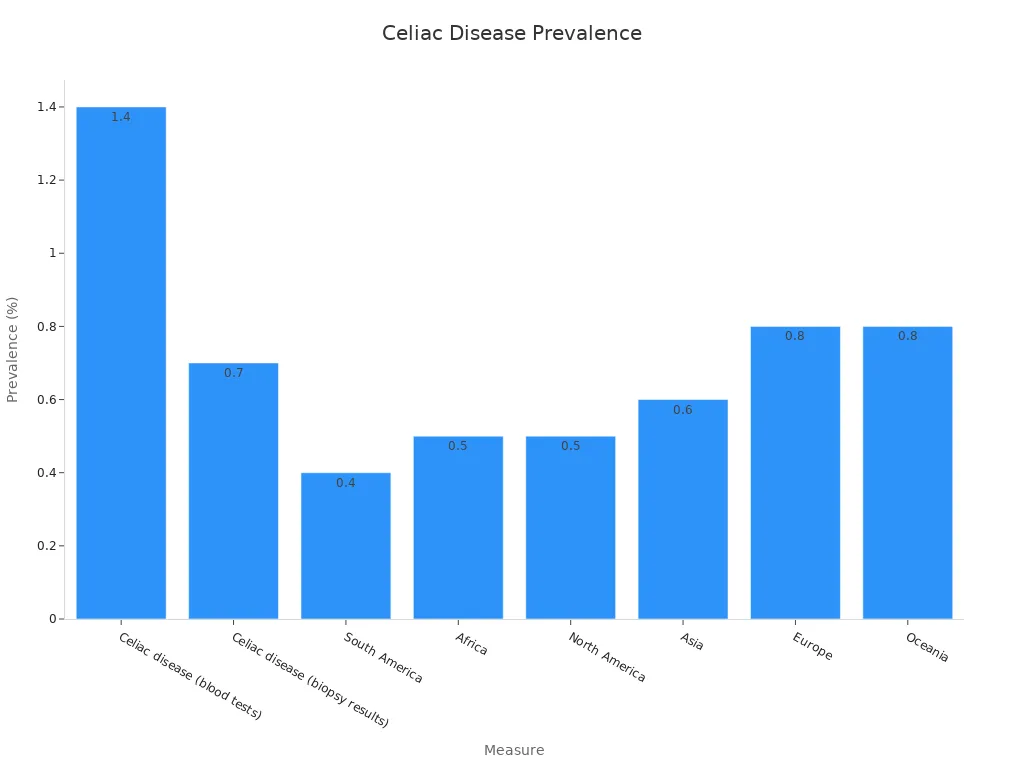
Gluten intolerance is a broad term for adverse symptoms after gluten consumption, including non-celiac gluten sensitivity, which lacks a universally accepted diagnostic test and is difficult to measure consistently across countries. Most global prevalence data reflect celiac disease rather than general gluten intolerance.
These options let restaurants serve familiar flavors to more people without compromising taste. Eliminating gluten and reducing sodium from your condiment lineup carries a small cost next to the loyalty and repeat business it can generate.
Stock gluten-free and low sodium soy sauce to protect diners with dietary restrictions.
Offer these options to reduce allergen risks and avoid costly incidents.
Attract health-conscious customers who will return and bring friends.
Stand out from competitors by clearly labeling your soy sauce choices.
Integrate these options into your menu with simple recipe swaps and staff training.
Train your staff to answer questions about gluten and sodium confidently.
Keep costs low because guests use only a splash and bottles last for months.
Measure sales and feedback to prove the value of your soy sauce program.
You will meet more gluten-avoiding diners every year. Some have celiac disease, an autoimmune condition. Others manage non-celiac gluten sensitivity or simply feel better without wheat. The global gluten-free food market reflects this shift.
|
Source |
Base Year Value |
Forecast Value |
CAGR |
|---|---|---|---|
|
GMI Insights |
USD 12.9 billion (2024) |
USD 14.1 billion (2025) → USD 33 billion (2034) |
9.9% |
|
Grand View Research |
USD 8.5 billion (2025) |
USD 9.3 billion (2026) → USD 18.3 billion (2033) |
10.1% |
|
BCC Research |
USD 11.8 billion (2025) |
USD 19.2 billion (2031) |
8.6% |
These buyers spend real money on food they trust. A bottle of gluten-free soy sauce on your shelf signals that your kitchen takes them seriously.
Gluten-avoiding customers eat out regularly. They simply choose restaurants with clear options. One safe meal earns a repeat visit. One careless meal loses them for good.
Many guests now read labels before they order. They are reducing their salt intake for blood pressure, heart health, or general wellness. Standard soy sauce delivers high levels of sodium in a single splash. A low in sodium alternative lets these diners enjoy the same dish without the trade-off.
Soy sauce sits on nearly every table and in nearly every stir-fry, marinade, and dipping sauce. That makes it the single easiest place to cut sodium. Offer a lower-sodium pour, and you solve a health concern at the point of use.
Track the questions your servers hear. "Is this gluten-free?" and "Can I get that with less salt?" are not rare anymore. Each request marks a customer who wants to order but needs reassurance first.
A guest who cannot eat safely takes the whole table elsewhere. You lose the check, the tip, and the future visits. Stocking tamari and a reduced-sodium soy sauce costs little. Losing that table costs far more. Allergens also carry liability risk, and a prepared kitchen protects both your guests and your business.
Allergen safety protects your guests and your business. A single mistake can harm a diner with allergies and expose your restaurant to serious liability. Clear systems for handling allergens turn a risk into a mark of professionalism.
Store gluten-free soy sauce and tamari in sealed containers away from standard soy sauce. Use dedicated dispensers with clear labels. A separate bottle prevents accidental mixing during busy service. Color-coded lids help staff grab the right product fast.
Designate a small prep zone for allergy-friendly dishes. Assign separate utensils, cutting boards, and bowls to that station. Wash hands and tools before any allergen-sensitive order. These habits stop cross-contact before it reaches the plate.
Your menu must tell diners what they need to know. Mark dishes that contain common allergens. Restaurants must manage milk, eggs, fish, shellfish, tree nuts, peanuts, wheat, and soy. Most regulations also recognize gluten-containing cereals, crustaceans, and tree nuts as major allergens. Some regions add mustard, celery, mollusks, lupin, and buckwheat to the list.
|
Category |
Allergens Identified |
|---|---|
|
Common allergens restaurants must manage |
Milk, eggs, fish, shellfish, tree nuts, peanuts, wheat, soy |
|
Widely recognized in most regulations |
Milk, eggs, gluten-containing cereals, crustaceans, peanuts, tree nuts |
|
Region-specific allergens |
Mustard, celery, mollusks, lupin, buckwheat |
Train every server to answer questions about allergens with confidence. Staff should know which dishes contain soy sauce and which use a gluten-free soy sauce. A soy allergy requires the same care as any other food allergy. Knowledgeable staff turn compliance into guest trust.
One allergic reaction can lead to medical bills, legal claims, and lost reputation. Document your allergen procedures and keep records of supplier certifications. A written protocol shows due diligence if a dispute arises.
Tell guests exactly how you handle dietary restrictions or allergies. Share your sourcing and prep practices openly. Transparency builds confidence, and confident guests return with friends.
You can own a niche that most competitors ignore. Diners with dietary restrictions often search for a restaurant they can trust before they book a table. A clearly labeled bottle of gluten-free soy sauce tells them your kitchen plans for their needs. That small signal turns a hesitant guest into a regular.
Respectful, well-informed answers to gluten-free diners validate their concerns and let them order with confidence. This approach can boost loyalty and position your business among the top gluten-free restaurants in your area. Retailers that invest in gluten-free products report the same effect, with customer retention described as intense. Your soy sauce choice can earn that same devotion.
Most restaurants stock one standard soy sauce and stop there. You can offer a full set: gluten-free soy sauce, low sodium soy sauce, and tamari. Guests notice the difference immediately. A thoughtful condiment program separates your menu from the restaurant down the street.
Print your soy sauce options directly on the menu. Note which dishes use low sodium soy sauce and which use gluten-free soy sauce. Clear labels about allergens and dietary needs show that you take every guest seriously. Transparency becomes a reason to choose you.
Guests with allergies talk to each other. They share safe restaurants in support groups, review sites, and social media. One careful meal with the right soy sauce can generate a glowing review. That review reaches dozens of diners who face the same dietary restrictions.
An inclusive menu welcomes everyone at the table. Offer gluten-free soy sauce, low sodium soy sauce, and tamari side by side. Every guest can season a dish without worry. This reputation for inclusion spreads far beyond the plate, and it keeps your tables full.
Tamari and gluten-free soy sauce give you two distinct tools. Tamari ferments from soybeans alone, so it carries a richer, smoother flavor and a slightly darker color. Standard gluten-free soy sauce uses rice in place of wheat and tastes close to regular soy sauce. Use tamari sauce for dipping and finishing, and use the rice-based bottle for everyday cooking.
|
Attribute |
Tamari |
Gluten-free soy sauce (non-tamari) |
|---|---|---|
|
Base ingredients |
Fermented soybeans only; no grains |
Made with rice instead of wheat |
|
Gluten content |
Gluten-free (no wheat) |
Gluten-free (rice replaces wheat) |
|
Flavor profile |
Richer, smoother; slightly darker color |
Taste similar to regular soy sauce |
|
Relationship |
Often labeled as gluten-free soy sauce |
A separate gluten-free option that is not tamari |
Look for third-party certification on every bottle. Kikkoman® Gluten-Free Tamari Soy Sauce is traditionally brewed from four simple ingredients—water, soybeans, salt and sugar—and is certified gluten-free by the Gluten Intolerance Group (GIG). Keep certificates on file for staff reference.
A reduced-sodium version keeps the savory depth your guests expect. A tablespoon of regular soy sauce contains about 920 mg of sodium, while Kikkoman Less Sodium Soy Sauce delivers roughly 40% less. That difference matters to anyone watching salt intake.
|
Type of Soy Sauce |
Sodium per Tablespoon |
Comparison |
|---|---|---|
|
Regular Soy Sauce |
~900–1,000 mg |
Baseline (higher sodium) |
|
Low Sodium Soy Sauce |
~550–600 mg |
About 40% less sodium than regular |
Pour the lower sodium bottle tableside for dipping and dressings. Use it in marinades where salt balance matters. Pair it with grilled vegetables, rice bowls, and lean proteins.
Coconut aminos sauce suits guests who avoid soy entirely. This condiment ferments from coconut blossom nectar and sea salt, and it is naturally gluten-free and soy-free. It is free of soy, gluten, and msg, and it brings mild sweetness with real umami. Offer it when a diner asks what to use instead of soy sauce.
Stock tamari, a gluten-free alternative, and coconut aminos side by side. Coconut aminos carries about one-third the sodium of soy sauce, so swap it at a 1:1 ratio and adjust salt to taste. For the reverse swap, use 1 tablespoon soy sauce plus 2 tablespoons warm water in place of 3 tablespoons coconut aminos. These soy sauce substitutes cover gluten, soy, and sodium needs at once, and your kitchen gains a complete set of soy sauce alternatives.
You have the products. Now you need a plan to put them to work. Integration touches three areas: your recipes, your team, and your supply chain. Handle each one with care, and the switch becomes routine within a few service cycles.
Start with the dishes you already sell. Most recipes accept a direct swap, but the result can shift. Tamari carries a deeper, more concentrated flavor than standard soy sauce. A small amount in a finishing sauce works well. A large amount in a marinade may change the dish in ways your guests notice.
Tamari can be substituted in recipes calling for soy sauce, but the taste and texture differ and can change a recipe—sometimes quite a bit. For recipes using just a few tablespoons, tamari works; for large amounts like marinades, use it with caution, knowing the result may taste noticeably different.
Match your adaptation method to the recipe type. This table gives you a practical starting point for common menu categories.
|
Recipe Type |
Adaptation Method |
|---|---|
|
Marinades |
Substitute tamari or gluten-free soy sauce at a 1:1 ratio; the richer flavor works well in gluten-free teriyaki-style recipes. |
|
Stir-fries |
Begin with about ¾ of the recipe's called-for amount, then taste and adjust, since tamari is more intense. |
|
Dipping sauces |
Expect the biggest flavor difference; tamari-based versions often add more complexity and depth. |
|
Soups |
Use a perfect 1:1 substitution; tamari's fermentation adds extra layers to soup bases. |
Run a tasting session before you change a single menu item. Cook the original version and the adapted version side by side. Invite your chef, a server, and one or two regular guests to compare. Keep the swap only when the dish holds up.
Make your soy sauce program visible. Add a short note to the menu that lists your gluten-free soy sauce, your reduced-sodium pour, and your coconut aminos sauce. Guests who scan for safe options will find the answer without asking.
Build a special around the change. A gluten-free teriyaki bowl or a low-sodium stir-fry gives you a story to promote. Feature the dish on your board and in your social posts. Each special teaches guests that your kitchen plans for dietary needs.
Your servers must know each bottle on the shelf. Teach them the core differences in plain terms. Tamari ferments from soybeans alone and carries a richer taste. Standard gluten-free soy sauce uses rice and tastes closer to the familiar pour. Coconut aminos brings mild sweetness and no soy at all.
Build a one-page reference sheet for the whole team. List each product, its key traits, and the dishes it suits. Keep the sheet at the pass and in the server station. A quick glance settles most questions during a rush.
Script the common questions. When a guest asks whether a dish is safe, your server should confirm the ingredients and the prep method. When a guest asks for less salt, your server should offer the lower-sodium bottle by name.
Role-play these exchanges during pre-shift meetings. Give each server a turn to answer a gluten question and a salt question. Practice builds speed, and speed builds guest confidence. A team that answers well turns a dietary request into a reason to return.
Specialty bottles cost more per ounce than the standard pour. Coconut aminos costs more per ounce than standard soy sauce, and certified gluten-free products carry a premium as well. Weigh that premium against portion size. A diner uses a splash, not a cup, so the per-plate cost stays small.
Track your usage for the first month. Count how many bottles you open and how many covers you serve. Divide the cost by the plates to see the real number. Most commercial kitchens find the added cost lands in cents per dish, not dollars.
Choose suppliers who document what they sell. Ask for third-party gluten-free certification on every bottle. Keep those certificates on file for staff reference and for any guest who asks.
These trusted options give you a reliable starting set:
San-J Tamari (dedicated facility, consistent quality)
Kikkoman Gluten Free (widely available, familiar taste)
La Choy Gluten Free (budget-friendly, reliable)
Coconut Secret Aminos (soy-free, naturally sweet)
Avoid regular soy sauce, restaurant packets, and generic store brands unless they carry certification. Many "lite" or reduced-sodium versions still contain wheat, so read every label. Build a relationship with one or two dependable vendors, and confirm lead times before you run low. A steady supply keeps your menu consistent and your guests safe.
You spend a few dollars per bottle. You gain a measurable lift in covers, loyalty, and reputation. The return on investment for a gluten-free and low sodium soy sauce program shows up in several places. Track each one, and you can prove the value to your own bottom line.
Your point-of-sale system gives you the first hard number. Modern POS platforms record sales by individual menu item, so you can spot daily and weekly trends without extra work. Ask your staff to report which dishes guests mention most and which items sell out fast. That feedback adds a layer of insight the receipts cannot show.
|
Tracking Method |
How It Works |
What It Reveals |
|---|---|---|
|
Sales data |
Review POS or dashboard reports to identify top-selling items over a month or quarter |
Quantitative performance of new menu items |
|
Customer feedback |
Collect private feedback via digital receipts and public feedback via website or social media |
Qualitative sentiment; repeated complaints signal needed adjustments |
|
Loyalty and marketing engagement |
Monitor which menu-item notifications earn the most email or text engagement |
Which new items excite the community |
|
Limited-time offers |
Launch new dishes as specials first, then promote via website, social, and email |
Real-world feedback before full menu integration |
Watch the requests tied to your soy sauce lineup. Count how often guests ask for a gluten-free pour or a lower-sodium option. A rising count tells you the program is working. A flat count tells you to promote it harder on the menu.
Set up feedback channels where guests already are. Place comment cards at the table, send short surveys through digital receipts, and watch your social media mentions. Centralize every channel in one place, so you can read the full picture with ease.
Track three core indicators: customer satisfaction ratings, sales data, and return-customer rates. Compare sales before and after you added the new soy sauce options. Then use those insights to refine the menu. A guest who returns for a safe, flavorful meal is the clearest sign of return on investment you will find.
Soy sauce keeps for months in a sealed bottle. Your specialty bottles carry the same long shelf life as the standard pour. Spoilage waste stays near zero, and you open a bottle only when a guest orders. That low waste profile protects your margin on every plate.
Portion size keeps the cost small. A diner uses a splash, not a cup. Divide your monthly bottle cost by the number of covers you serve, and the added cost lands in cents per dish. Few investments in your kitchen carry that low a risk.
Your soy sauce program creates new upsell chances. Offer a gluten-free dipping sauce as an add-on. Feature a low-sodium stir-fry as a premium special. Each option gives your server a reason to suggest one more item.
Menu flexibility adds value over time. You can swap a tamari-based sauce into a seasonal dish without rebuilding the recipe. You can launch a low-sodium version of a bestseller and test the response. That flexibility lets you chase new revenue without a full menu overhaul.
An inclusive menu reaches diners your competitors turn away. Gluten-avoiding guests, sodium-conscious guests, and soy-free guests all find a safe option at your table. Each group brings friends and family. One accommodating dish can fill a four-top.
That broader base compounds. A guest with celiac disease returns with a group. A health-conscious diner books your patio for a weekly lunch. Your soy sauce options open doors to segments that spend real money and stay loyal.
Reputation grows through small, consistent signals. A clearly labeled gluten-free soy sauce bottle tells every guest that your kitchen plans ahead. Guests share that experience in support groups, review sites, and social feeds. Each positive mention reaches dozens of diners who face the same dietary needs.
Over time, your restaurant earns a name as a place where everyone can eat well. That reputation lowers your marketing cost and raises your standing in the community. The soy sauce on your shelf becomes part of your brand story, and that story keeps your tables full for years.
You may hesitate before adding new bottles to your shelf. Taste, kitchen workflow, and demand all raise fair questions. Each concern has a practical answer.
Gluten-free soy sauce and tamari sauce deliver real depth. A side-by-side comparison shows how they differ from the standard pour.
|
Attribute |
Tamari (gluten-free) |
Regular Soy Sauce |
|---|---|---|
|
Origin |
Japan |
China |
|
Ingredients |
Soy and rice (gluten-free) |
Soy and wheat |
|
Fermentation |
A year or longer |
Shorter |
|
Color |
Generally darker |
Lighter |
|
Flavor |
Richer, less salty, smoother, deeper umami |
Sharper with a more pronounced bite |
|
Viscosity |
Thicker |
Thinner |
A tasting panel compared Kikkoman, San-J, Yamasa, and Wan Ja Shan. Their notes give you a realistic picture:
Kikkoman gluten-free soy sauce carries a lighter color and a less inky flavor.
San-J gluten-free tamari finishes slightly tart, with sodium near 940 mg per tablespoon.
Gluten-free versions often end with a tart note, so a little sugar balances a dipping sauce.
Yamasa earned steady praise, and Wan Ja Shan's tamari showed deeper flavor than its regular gluten-free pour.
Run your own tasting before you commit. Cook one dish with your current soy sauce and one with tamari. Let your chef and a few regulars compare. Keep the swap only when the plate holds up.
Separate bottles prevent mistakes. Store tamari and your soy-free coconut aminos on a dedicated shelf. Label every container in clear lettering. Color-coded caps help staff grab the right bottle during a rush.
Add the new bottles to your existing prep station. Assign one utensil to each product. Post a one-page sheet at the pass. These small steps keep service fast and protect guests from allergens.
Count the dietary questions your servers hear each week. Track requests for gluten-free dishes and lower-salt pours. Rising numbers confirm demand in your neighborhood.
Begin with one gluten-free soy sauce alternative and one reduced-sodium bottle. Measure sales for a month. Expand the lineup once guests respond. A small trial limits risk and proves the value.
Gluten-free and low sodium soy sauce meets real dietary needs, strengthens safety and compliance, and builds competitive advantage. Practical integration makes adoption simple and cost-effective. Update your menu with clear soy sauce labels. Train staff on each soy sauce variety. Source certified soy sauce from reliable suppliers. Start with a small soy sauce trial. Measure results, then expand your soy sauce lineup as demand grows. Your guests gain safe, flavorful soy sauce options. Your restaurant gains loyalty, trust, and a stronger market position.
Not always. Tamari brews from soybeans alone, so it is naturally gluten-free. Many gluten-free soy sauce products use rice instead of wheat. Both work for gluten-avoiding guests, but their flavors differ. Check the label and keep certified bottles on hand.
A typical low sodium soy sauce delivers about 40% less sodium than the regular pour. That means roughly 550 to 600 mg per tablespoon instead of 900 to 1,000 mg. You keep the umami your guests expect and cut the salt they want to avoid.
No single bottle covers everyone. Tamari handles gluten concerns. Low sodium soy sauce serves salt-conscious diners. Coconut aminos covers soy-free guests. Stock all three, and your kitchen answers every request without a special order.
Store each soy sauce in a sealed, labeled bottle on a dedicated shelf. Assign separate dispensers and utensils to allergen-friendly products. Train staff to wash hands and tools before any allergy-sensitive order. These habits stop cross-contact before it reaches the plate.
The per-plate cost stays small. Guests use a splash, not a cup, and sealed bottles keep for months. Divide your monthly bottle cost by your covers, and the added expense lands in cents per dish. Loyalty and repeat visits outweigh that cost.
Build a one-page reference sheet listing each soy sauce, its key traits, and the dishes it suits. Post it at the pass and in the server station. Role-play common gluten and salt questions during pre-shift meetings. Practice builds speed and guest confidence.
Begin with one gluten-free soy sauce and one reduced-sodium bottle. Add clear labels to your menu. Track requests and sales for a month. Expand your soy sauce lineup once guests respond. A small trial limits risk and proves the value.
Yes. Gluten-avoiding and sodium-conscious diners scan menus for safe options before they book. A clearly labeled soy sauce bottle signals that your kitchen plans ahead. Those guests return, bring friends, and share their experience in reviews and support groups.
 Subscribe To Our Newslettter To Stay Tuned



 IPv6 network supported
Hi! Click one of our members below to chat on

 Recipe Books
 PRB Soy Sauce Museum
 English
 English
 français
 русский
 español
 العربية