leave a message
If you are interested in our products and want to know more details,please leave a message here,we will reply you as soon as we can.
When choosing soy sauce, many consumers look at the words "Superior," "Premium," or "First Grade" on the bottle. However, these terms do not always tell the full story. One of the most useful indicators to check is amino acid nitrogen, a measurement that helps explain the composition and fermentation characteristics of soy sauce.
Understanding how to read a soy sauce label makes it easier to compare products, evaluate quality, and select the right seasoning for different dishes. For importers, food distributors, retailers, and professional kitchens, knowing the difference between amino acid nitrogen, standardized quality grades, and commercial terms such as "Superior" is also important when sourcing products from different manufacturers.
This guide explains what amino acid nitrogen means, how Chinese soy sauce grades are classified, what the word "Superior" actually indicates, and what buyers should check before choosing a soy sauce. It also uses Pearl River Bridge products as practical examples of traditionally brewed Chinese soy sauce.
Amino acid nitrogen is a measurement of the nitrogen contributed by free amino acids and related amino compounds in soy sauce. It is commonly used as an indicator of the flavor-producing components developed during fermentation.
During soy sauce fermentation, enzymes produced by microorganisms break down soybean proteins into smaller peptides and amino acids. These compounds contribute to the savory, umami-rich taste associated with traditionally brewed soy sauce.
In general, a higher amino acid nitrogen value indicates a greater concentration of these nitrogen-containing flavor compounds. This is one reason why the measurement is widely used in Chinese soy sauce quality standards.
However, amino acid nitrogen should not be treated as the only measure of product quality. Aroma, color, saltiness, fermentation method, ingredient selection, and intended application also influence the final characteristics of soy sauce.
Quick answer: Amino acid nitrogen measures an important group of nitrogen-containing compounds formed during fermentation. A higher value generally indicates more amino-acid-related flavor components, but it does not automatically mean that the soy sauce tastes better or is suitable for every application.
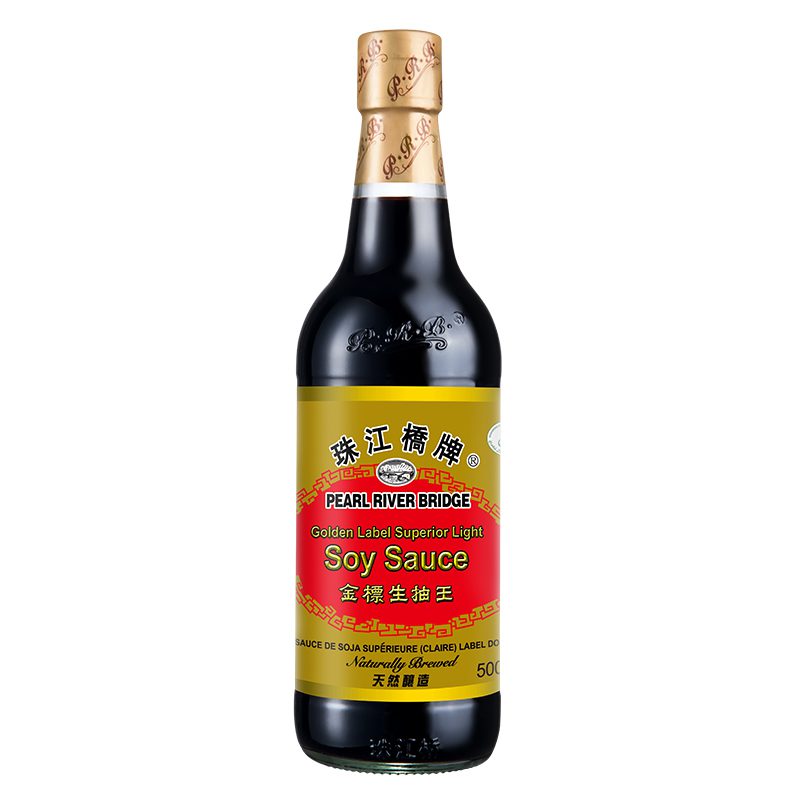
For example, Pearl River Bridge describes its traditionally brewed soy sauce as undergoing more than 100 days of fermentation, using selected soybeans and natural fermentation conditions. This longer brewing process helps develop the characteristic aroma and savory flavor of its soy sauce products.
Learn more about Pearl River Bridge Light Soy Sauce and its different product options.
Amino acid nitrogen is generally expressed in grams per 100 milliliters (g/100 mL) of soy sauce. The measurement is determined through laboratory testing rather than by visual inspection or taste alone.
For example, consider the following results:
| Amino Acid Nitrogen | General Interpretation |
|---|---|
| 0.40 g/100 mL | Basic reference level for the lowest listed grade |
| 0.55 g/100 mL | Meets the high-salt liquid fermentation Grade 2 threshold |
| 0.70 g/100 mL | Meets the Grade 1 threshold |
| 0.80 g/100 mL | Meets the Superior Grade threshold |
These values are minimum thresholds for the specified Chinese grading system, not universal quality standards for every soy sauce sold internationally.
Buyers should also distinguish between amino acid nitrogen and total nitrogen. Total nitrogen measures a broader range of nitrogen-containing compounds, while amino acid nitrogen focuses on the amino-acid-related fraction. They are not interchangeable measurements.
In China, traditionally brewed soy sauce has commonly been classified into four quality grades: Superior Grade, Grade 1, Grade 2, and Grade 3.
Under GB/T 18186-2025, the minimum amino acid nitrogen requirements differ according to the fermentation method. The following table summarizes the published thresholds.
| Quality Grade | High-Salt Liquid Fermentation | Low-Salt Solid-State Fermentation |
|---|---|---|
| Superior Grade | ≥ 0.80 g/100 mL | ≥ 0.80 g/100 mL |
| Grade 1 | ≥ 0.70 g/100 mL | ≥ 0.70 g/100 mL |
| Grade 2 | ≥ 0.55 g/100 mL | ≥ 0.60 g/100 mL |
| Grade 3 | ≥ 0.40 g/100 mL | ≥ 0.40 g/100 mL |
Important: These are minimum amino acid nitrogen requirements, not complete product specifications. The applicable standard also includes other quality indicators, including total nitrogen, soluble solids, sensory characteristics, and other technical requirements.
GB/T 18186-2025 was published on May 30, 2025, and is scheduled to take effect on December 1, 2026, replacing GB/T 18186-2000. Buyers sourcing Chinese soy sauce should check the applicable edition and labeling requirements when reviewing supplier documentation.
For international buyers, it is also important to remember that Chinese quality grades should not automatically be equated with Japanese, European, or American product classifications. Each market may apply different labeling rules and product requirements.
Not necessarily. A higher amino acid nitrogen value is a useful indicator, but it does not tell the entire story of a soy sauce's flavor, production method, or suitability.
Two products may both contain 0.80 g/100 mL of amino acid nitrogen but have noticeably different aromas, colors, salt levels, and flavor profiles.
Several factors should be considered when comparing products:
For food manufacturers and distributors, the best approach is to compare laboratory specifications alongside sensory evaluations and product application tests.
For household consumers, a balanced flavor profile and the intended use of the sauce are often more practical considerations than selecting a bottle based on one numerical indicator.
The word "Superior" can be confusing because it may appear in a product name, a marketing description, or a formal quality classification.
In the Chinese grading system, Superior Grade is a defined quality classification with specific technical requirements. However, when the word "Superior" appears as part of an English product name, it should not automatically be interpreted as proof that the product has been independently classified as Superior Grade under GB/T 18186.
For example, Pearl River Bridge offers products such as Superior Light Soy Sauce and Golden Label Superior Light Soy Sauce. These are established product names within its soy sauce range.
The company's Golden Label Superior Light Soy Sauce is described as a flagship product in its light soy sauce series. Pearl River Bridge states that it is made through more than 100 days of fermentation and is extracted from the first batch, with applications including dipping, stir-frying, and marinating.
However, the English product name alone does not establish a particular amino acid nitrogen test result. Buyers who require a specific Chinese quality grade should request the relevant product specification and laboratory test report.
Explore Golden Label Superior Light Soy Sauce to learn more about this product and its available packaging options.
In short, "Superior" can describe a product's positioning or refer to a formal quality grade, depending on the context. The label, applicable standard, and supporting test documentation should always be considered together.
Amino acid nitrogen is important, but a complete label review involves more than one number. Here are several other details worth checking before purchasing or sourcing soy sauce.
Ingredients: Check whether the product contains soybeans, wheat, water, salt, or other ingredients. Ingredient lists help buyers understand the product formulation and identify potential allergens.
Fermentation method: Look for information about naturally brewed or fermented soy sauce. Different fermentation methods can produce different flavor characteristics.
Sodium content: Sodium levels matter for consumers who monitor salt intake and for food manufacturers developing products with specific nutritional targets.
Color and flavor: Light soy sauce and dark soy sauce serve different purposes. Light soy sauce is commonly used for seasoning, dipping, and stir-frying, while dark soy sauce is often selected for color, braising, and marinades.
Certifications and compliance: Check relevant food safety certifications, allergen information, traceability documentation, and destination-market requirements. Certification claims should be verified against the actual product and valid documentation.
For buyers looking for different flavor and formulation options, Pearl River Bridge also provides a range of regular soy sauce products, including light soy sauce, dark soy sauce, organic soy sauce, and reduced-salt options.
Light soy sauce and dark soy sauce are both widely used in Chinese cooking, but they have different functions. Choosing the correct type is often more important than simply selecting the product with the highest amino acid nitrogen value.
| Comparison | Light Soy Sauce | Dark Soy Sauce |
|---|---|---|
| Main function | Seasoning and enhancing savory flavor | Adding color and depth to dishes |
| Color | Reddish-brown | Darker brown |
| Texture | Generally thinner | Often thicker |
| Common uses | Dipping, stir-frying, marinades | Braising, stewing, coloring, marinades |
For everyday seasoning, light soy sauce is generally the more versatile option. Dark soy sauce is more suitable when a recipe requires a deeper brown color and a richer appearance.
Pearl River Bridge's Superior Dark Soy Sauce is designed for applications such as marinating and coloring rice, noodles, and other dishes. Its darker color and thicker consistency make it useful for recipes where appearance is an important consideration.
When comparing soy sauce manufacturers, buyers should look beyond product names and focus on production processes, ingredient selection, quality management, and product consistency.
Pearl River Bridge is a Chinese seasoning brand with a product range covering traditional soy sauce and other Asian condiments. Its soy sauce production information highlights several characteristics:
These product characteristics give buyers a starting point for evaluating the brand's offerings. For commercial purchasing, individual specifications, product samples, and batch-level quality documents should still be reviewed before confirming an order.
Whether you are a food distributor, importer, restaurant supplier, or retail brand, understanding the difference between technical quality indicators and product positioning can help you make more informed sourcing decisions.
These frequently asked questions summarize the most important label-reading points, with numerical values and clear definitions for quick reference.
Under China's GB/T 18186-2025 standard, the minimum amino acid nitrogen level for Superior Grade soy sauce is 0.80 g/100 mL. Grade 1 requires at least 0.70 g/100 mL. The Grade 2 minimum is 0.55 g/100 mL for high-salt liquid fermentation and 0.60 g/100 mL for low-salt solid-state fermentation.
A soy sauce containing 0.80 g/100 mL has twice the measured amino acid nitrogen concentration of one containing 0.40 g/100 mL. Under the Chinese grading system, these values correspond to the Superior Grade and Grade 3 minimum thresholds, respectively, for both fermentation categories.
Under the Chinese formal grading system, Superior Grade has a higher minimum amino acid nitrogen requirement of 0.80 g/100 mL, compared with 0.70 g/100 mL for Grade 1. However, the word "Superior" in an English product name does not independently prove formal Superior Grade classification.
No. Amino acid nitrogen and sodium content are different measurements. A soy sauce with 0.80 g/100 mL amino acid nitrogen is not necessarily lower in sodium than one with 0.40 g/100 mL. Always check the nutrition information for sodium content.
No. Amino acid nitrogen measures the nitrogen associated with amino acids and related compounds, while total nitrogen covers a broader range of nitrogen-containing substances. Both indicators can provide useful information, but they measure different things.
Pearl River Bridge states that its traditionally brewed soy sauce products undergo more than 100 days of fermentation. The actual production specifications should be checked for the individual product.
The minimum is 0.80 g/100 mL under both high-salt liquid fermentation and low-salt solid-state fermentation classifications in GB/T 18186-2025.
GB/T 18186-2025 was published on May 30, 2025, and its scheduled implementation date is December 1, 2026. It replaces GB/T 18186-2000.
No. It is one important technical indicator, but buyers should also evaluate fermentation methods, raw materials, aroma, flavor, sodium content, product consistency, and applicable food safety requirements.
Reading a soy sauce label correctly means understanding both the technical specifications and the product's intended use. Amino acid nitrogen provides a measurable indication of important fermentation-related flavor compounds, while formal quality grades offer a structured way to compare products under a particular standard.
However, the word "Superior" should always be interpreted in context. It may refer to a formal quality classification or simply form part of a manufacturer's product name. Checking the applicable standard, laboratory results, ingredients, and product specifications is the more reliable way to evaluate soy sauce.
With more than 100 days of fermentation highlighted in its traditionally brewed soy sauce range, Pearl River Bridge offers different soy sauce options for consumers, food service businesses, and international buyers. Understanding these product differences can help you choose a sauce that matches your flavor preferences and application requirements.
 Subscribe To Our Newslettter To Stay Tuned



 IPv6 network supported
Hi! Click one of our members below to chat on

 Recipe Books
 PRB Soy Sauce Museum
 English
 English
 français
 русский
 español
 العربية