leave a message
If you are interested in our products and want to know more details,please leave a message here,we will reply you as soon as we can.
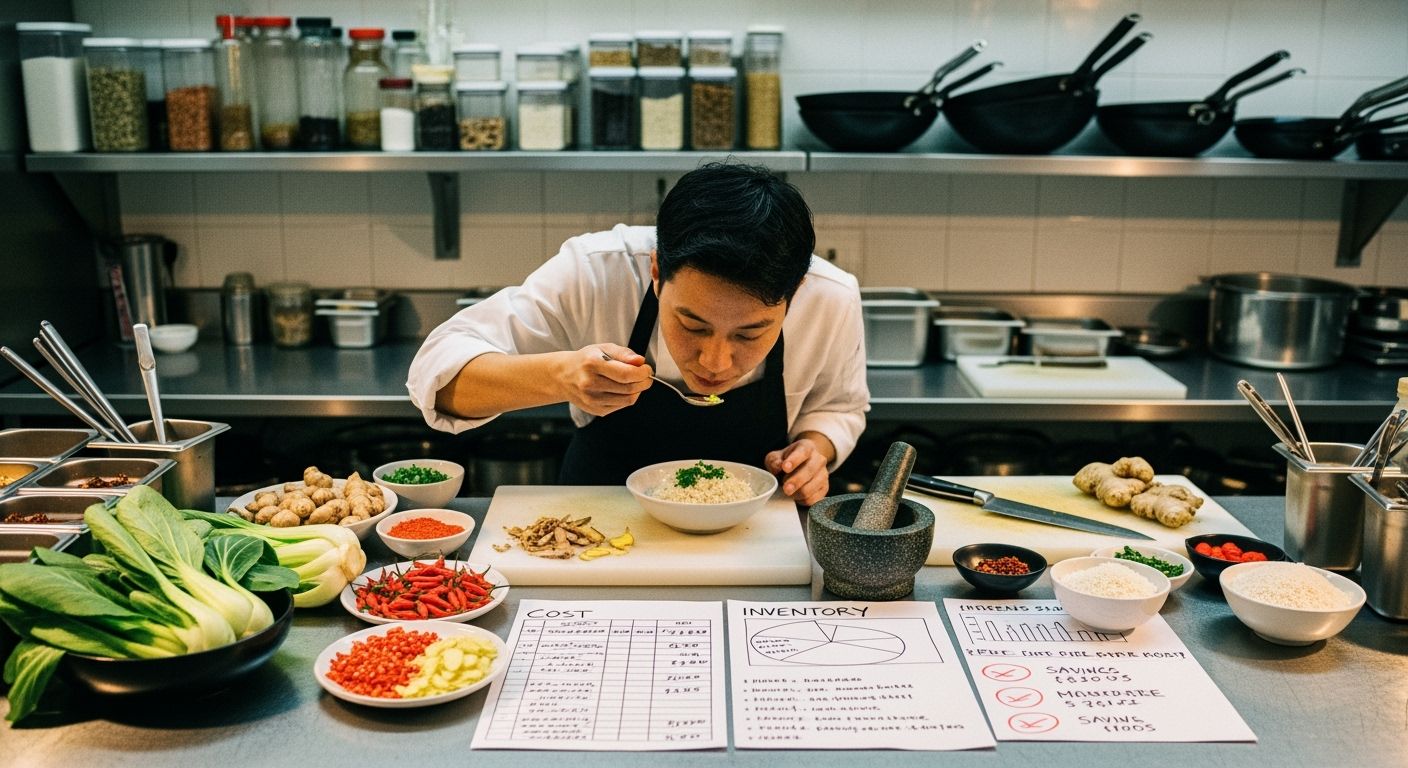
You can reduce food costs in your Asian restaurant without sacrificing authentic flavor. Food expenses often account for 28%–32% of total operating costs, making cost control essential. Consistent taste and supply stability help you maintain quality and customer satisfaction. Common challenges include balancing authenticity with scalability and sourcing regional ingredients. By optimizing your menu, standardizing portions, partnering with a reliable restaurant sauce supplier, and improving inventory management, you protect your margins while keeping dishes true to tradition.
Tip: Focus on practical strategies that maintain flavor and ensure stable supply.
|
Cost Category |
Percentage of Total Costs |
|---|---|
|
Food Costs |
28% - 32% |
|
Labor Costs |
25% - 30% |
|
Occupancy Costs |
8% - 12% |
|
Marketing and Advertising |
2% - 5% |
|
Miscellaneous |
2% - 5% |
|
Profit |
10% - 15% |
Optimize your menu by analyzing sales data to identify high-cost and low-performing dishes.
Cross-utilize ingredients across multiple dishes to reduce waste and simplify inventory management.
Implement portion control by training staff on standard serving sizes to maintain consistency and reduce costs.
Build strong relationships with suppliers to negotiate better pricing and ensure a stable supply of quality ingredients.
Use technology like inventory software to track stock levels and make data-driven purchasing decisions.
Encourage staff engagement by sharing cost control goals and rewarding waste reduction efforts.
Test recipes regularly to ensure flavor remains consistent while making cost-saving adjustments.
Monitor customer feedback and online reviews to maintain satisfaction and address any concerns promptly.
Optimizing your menu is a powerful way to reduce food costs while preserving the authentic flavors your customers expect. You can use data-driven strategies and ingredient streamlining to boost profitability and efficiency.
Start by reviewing your menu to pinpoint dishes that drive up food costs. Focus on items with expensive ingredients or complex preparation. You can improve margins by mastering simple dishes and highlighting those that use cost-effective proteins or vegetables. For example, grilled chicken salads and rich stocks from bones often deliver high profit margins.
Tip: Execute simple dishes well to maximize profitability and maintain quality.
Analyze your sales data to understand which dishes sell best and which ones lag behind. Use this information to adjust your menu, promote popular items, and phase out low-performing dishes.
Menu engineering helps you control costs and streamline selections.
Upselling opportunities arise when you identify premium dishes that can be paired with lower-profit items.
Data-driven decisions ensure your menu reflects customer preferences and cost performance.
Choose ingredients that work across multiple dishes. Cross-utilization reduces waste and simplifies inventory management. For instance, you can use chicken trim pieces in salads, soups, or stir-fries.
Cross-utilization increases efficiency and lowers food costs.
Labor efficiency improves when staff can prepare dishes quickly using familiar ingredients.
Simplify recipes to minimize the number of ingredients and steps required. Standardizing recipes ensures consistency in taste and cost.
Standardization prevents excessive ingredient use.
Portion control measures help match food served with menu pricing.
Training staff on recipe adherence is crucial for realizing these benefits.
Design specials around seasonal and local ingredients. Seasonal produce often costs less and delivers fresher flavors.
Adapt your menu to ingredient availability for cost savings.
Seasonal specials attract customers and provide a competitive advantage.
Note: Menu optimization supports continuous improvement. Track menu performance and adjust based on demand to enhance profitability.
By focusing on menu analysis, ingredient streamlining, and profitable specials, you create a menu that delights customers and protects your bottom line. Use these strategies to ensure your Asian restaurant stands out in a crowded market.
Consistent portion control forms the backbone of effective food cost management in Asian restaurants. You can maintain profitability and deliver a reliable dining experience by ensuring every dish meets a set standard. Portion consistency not only helps you control expenses but also builds trust with your customers, who expect the same quality and quantity each visit.
Train your kitchen staff to follow precise serving guidelines for every menu item. Use visual aids, such as plating photos or diagrams, to show the correct portion size. Conduct regular workshops to reinforce these standards. When your team understands the importance of consistency, you reduce food cost variance and improve customer satisfaction. Implementing portion control ensures that each dish contains a consistent amount of ingredients, which directly addresses food cost variance. This practice not only helps in managing expenses but also enhances customer satisfaction by providing a reliable dining experience.
Equip your kitchen with reliable measuring tools. Use portion scoops, digital scales, and ladles to ensure accuracy. Label containers for pre-portioned ingredients. These tools help your staff serve the right amount every time, reducing over-portioning and minimizing waste. Consistent use of measuring tools also speeds up service and simplifies training for new employees.
Tip: Create a portion control chart for your kitchen. Display it in a visible area to remind staff of standard serving sizes.
Observe how much food returns to the kitchen uneaten. Track plate waste for each dish over several days. If you notice frequent leftovers, consider reducing portion sizes. Adjusting portions based on actual consumption helps you cut costs without disappointing customers. You can also use customer feedback to fine-tune serving sizes. When you align portions with customer preferences, you avoid unnecessary waste and improve satisfaction.
Customers judge value by more than just portion size. They want to feel they are getting a fair deal for their money. Consider these real customer perspectives:
One diner said, "I would like the different options. I just don’t want less food for more money."
Another guest shared, "The portion sizes are important to me, but I also look for the value. If the full-sized portion is a better value that’ll give you two or three meals, I’ll do that then."
A customer observed, "I think with Chinese food it’s like a huge dish, so it’s hard to use self-control."
Someone else noted, "We had enough leftovers for at least one to two more meals."
You can offer multiple portion sizes or family-style options to address these concerns. Highlight the value of your dishes by emphasizing quality ingredients, authentic flavors, and the potential for leftovers. When customers perceive value, they remain satisfied even if you adjust portion sizes for cost control.
Remember: Portion control is not about giving less. It is about delivering consistent value and a memorable dining experience every time.
Smart sourcing forms the backbone of cost control and flavor consistency in your Asian restaurant. You can achieve stable supply, authentic taste, and better margins by building strong relationships with your suppliers and making strategic purchasing decisions.
You should develop long-term partnerships with your restaurant sauce supplier. These relationships allow you to negotiate better pricing, secure priority during shortages, and lock in quality standards. When you work closely with a restaurant sauce supplier, you gain access to exclusive deals and early information about new products. This approach helps you plan ahead and avoid last-minute price spikes.
A reliable restaurant sauce supplier ensures you never run out of essential ingredients. Consistent deliveries keep your kitchen running smoothly and your menu flavors true to tradition. The table below highlights the benefits of strong supplier partnerships:
|
Benefit |
Description |
|---|---|
|
Cost Savings |
Bulk purchasing leads to financial benefits without compromising quality. |
|
Ingredient Authenticity |
Sourcing from authentic suppliers ensures flavors remain true to tradition. |
|
Consistency |
Reliable suppliers provide consistent quality, essential for maintaining customer satisfaction. |
|
Reliable Service |
A dependable partner ensures timely delivery of fresh ingredients, crucial for restaurant operations. |
Bulk buying from a bulk seasoning supplier can lower your ingredient costs and simplify inventory management. You can take advantage of tiered pricing, where larger orders mean bigger discounts. For example:
Purchasing in larger quantities lowers the cost per unit, helping you maximize your budget while preserving flavor.
Many suppliers offer discounts, such as 10% off at $200 or 15% off at $500, making it easier to plan for busy periods.
You can also explore products like Soy Sauce Powder, which offer long shelf life and consistent taste in every batch. This approach reduces the risk of running out of key seasonings and helps you maintain menu quality.
You can further reduce costs and enhance freshness by sourcing seasonal and local ingredients. Adjust your menu to highlight what is available locally. This strategy supports local farmers and introduces unique flavors to your dishes. Consider the following advantages and challenges:
|
Advantages of Local Sourcing |
Challenges of Local Sourcing |
|---|---|
|
Fresher, better-tasting ingredients |
Irregular supply |
|
Reduced carbon footprint |
Food safety issues |
|
Support for local economies |
Need for local producers to meet quality standards |
|
Unique culinary experiences that attract tourists |
Inconsistent product labeling and packaging |
You can work with your restaurant sauce supplier to identify local alternatives for key sauces and condiments. This flexibility keeps your menu exciting and your costs under control.
Tip: Regularly review your supplier agreements and inventory needs. Strong supplier relationships and smart sourcing decisions help you deliver authentic flavors while protecting your bottom line.
Effective waste reduction starts with strong inventory management and smart storage. You can protect your margins and maintain quality by following proven methods that minimize spoilage and maximize ingredient use.
You should always use the First-In-First-Out (FIFO) method. Place newer stock behind older items so your team uses the oldest ingredients first. This simple step reduces spoilage and keeps your kitchen running smoothly. FIFO works best when you label all products with delivery dates and train staff to rotate stock during every shift.
Track your inventory regularly to spot trends and prevent over-ordering. Conduct weekly inventory counts and compare them to sales data. This practice helps you identify which items move quickly and which ones sit unused. Set par levels for each ingredient to avoid excess stock. Use inventory software for real-time tracking and to alert you when supplies run low. Strong vendor relationships also help you adjust orders quickly if demand changes.
Tip: Standardize recipes and portions to ensure consistent ingredient usage. This step makes tracking easier and reduces unexpected waste.
Key Inventory Management Steps:
Implement FIFO for all perishable goods.
Count inventory weekly and monitor usage patterns.
Set par levels to avoid overstocking.
Use technology for real-time inventory updates.
Build strong relationships with suppliers for flexible ordering.
Standardize recipes and portions across your menu.
Monitor food cost percentage every week.
Cross-utilize ingredients in multiple dishes.
Track and analyze waste to find problem areas.
Adjust your menu based on inventory and sales data.
Vacuum sealing extends the shelf life of meats, seafood, and prepared sauces. You can store ingredients longer without losing quality or flavor. This method also prevents freezer burn and reduces the risk of contamination. Invest in a reliable vacuum sealer and train your staff to use it for bulk proteins, prepped vegetables, and house-made sauces. Proper storage keeps your ingredients fresh and your costs under control.
Transform leftovers into new menu items to reduce waste and boost profits. Use vegetable trimmings and bones to create rich stocks for soups or sauces. Repurpose cooked rice into fried rice specials or turn extra proteins into lunch bento boxes. You can also offer daily side dishes that feature surplus produce. This approach not only cuts waste but also adds variety to your menu.
Note: Encourage your kitchen team to suggest creative ways to use leftovers. Staff engagement leads to more ideas and less waste.
By mastering inventory management, using advanced storage techniques, and finding new uses for leftovers, you can significantly reduce food waste in your Asian restaurant. These steps help you save money, protect flavor, and support a more sustainable operation.
Your staff plays a critical role in controlling food costs and maintaining consistent quality. You can empower your team to support your restaurant’s goals by sharing clear objectives, offering incentives, and providing ongoing training.
You should start by making cost control goals visible and understandable. When you share your targets for food cost percentage and waste reduction, your staff sees how their actions impact the restaurant’s success. Use staff meetings to explain how careful portioning, proper storage, and minimizing waste contribute to profitability. Display charts or progress boards in the kitchen to track performance.
Tip: Celebrate milestones together. Recognition builds motivation and teamwork.
Motivating your staff with incentives encourages responsible behavior and reduces waste. You can implement reward programs that recognize individuals or teams who achieve waste reduction targets. Consider these proven approaches:
Hangzhou restaurants use a 'White and Black List' system to highlight responsible staff and broadcast anti-food waste messages.
Shenzhen canteens analyze data to minimize ingredient waste and promote food donations. They also enforce rules against excessive ordering.
You can adapt these strategies by offering bonuses, extra time off, or public recognition for staff who consistently follow portion guidelines and suggest creative ways to use leftovers.
Note: Incentives work best when you combine them with clear communication and regular feedback.
Continuous training ensures your staff understands the importance of their role in cost management and quality control. You should educate employees about the financial impact of food costs. Training on proper storage, handling, and portioning helps your team prepare dishes consistently and reduces waste. Supervision and accountability minimize pilferage and protect your margins.
Teach staff how to store ingredients correctly to extend shelf life.
Train employees to measure portions accurately for every dish.
Hold regular workshops to reinforce best practices and update procedures.
You can use checklists and supervision to maintain standards. When you invest in ongoing training, you build a culture of responsibility and excellence.
Tip: Encourage staff to share feedback and suggest improvements. Engagement leads to innovation and better results.
By focusing on cost awareness, incentives, and ongoing training, you create a team that supports your restaurant’s financial health and delivers consistent, high-quality dishes. Staff engagement is essential for sustainable cost control and customer satisfaction.
Embracing technology can transform how you manage food costs in your Asian restaurant. Modern tools help you track inventory, make smarter purchasing decisions, and integrate your point-of-sale (POS) system for seamless operations. By using the right technology, you gain real-time insights, reduce waste, and protect your margins.
Inventory software gives you control over your stock and costs. You can monitor ingredient levels, track usage, and spot trends before they become problems. Many solutions offer mobile apps, recipe costing, and smart ordering features. These tools help you identify profitable dishes and forecast demand.
|
Feature |
Description |
|---|---|
|
Mobile App |
Faster ordering and easier tracking with a mobile application. |
|
Recipe Costing |
Breaks down ingredient costs for menu items, identifying profitable dishes. |
|
Smart Ordering |
Uses predictive analytics to forecast demand and minimize food waste. |
|
Real-Time Updates |
Provides live updates on inventory costing and food cost transparency. |
|
Integrations |
Seamless integration with major POS platforms and accounting software. |
|
Case Studies |
Demonstrates effectiveness in reducing costs and improving profitability for various restaurants. |
You can see results quickly. For example, some restaurants have streamlined inventory management and reduced cost of goods by 3%. Others have gained inventory visibility and reduced food waste, which improves profitability.
Real-time tracking lets you know exactly what you have in stock at any moment. You avoid over-ordering and prevent running out of key ingredients during busy periods. With live updates, you can react to changes in demand and adjust your orders instantly. This approach keeps your kitchen efficient and your costs under control.
Data-driven decision-making tools help you optimize purchasing and reduce food costs. These platforms compare prices across multiple suppliers and integrate with commodity market data to predict price trends. You can time your purchases when prices are low and avoid costly mistakes.
|
Evidence Description |
Impact on Purchasing and Food Costs |
|---|---|
|
Compare prices across suppliers |
Identifies opportunities to reduce costs without compromising quality standards. |
|
Integrate with commodity market data |
Helps you time large purchases when prices are favorable. |
|
Track every ingredient leaving the kitchen |
Provides real-time visibility into margins on every dish. |
|
Analyze sales history and trends |
Enables data-driven decisions on ingredient ordering and prevents stock shortages. |
You can use these insights to adjust your purchasing strategy. For example, smart forecasting technology analyzes your sales history and predicts future demand. This helps you order the right amount of ingredients, reducing waste and preventing shortages. You maintain consistent quality while keeping costs in check.
Integrating your POS system with inventory management brings even more control. You track stock levels in real time, receive automated alerts when it is time to reorder, and minimize overstocking. This integration reduces order errors and speeds up service, as staff can send tickets directly to the kitchen.
|
Benefit |
Description |
|---|---|
|
Real-time tracking |
Helps monitor stock levels to avoid running out during busy periods. |
|
Automated alerts |
Notifies when it's time to reorder, preventing last-minute shortages. |
|
Reduced waste |
Efficient stock management minimizes overstocking and spoilage. |
Ingredient-level tracking
Automatic stock deduction
Purchase order management
Central warehouse integration
Low-stock alerts
Adopting technology such as AI, IoT, and machine learning can further enhance efficiency. These tools help you predict meal demand, optimize inventory, and create personalized customer experiences. As a result, you reduce food waste, improve service, and lower your overall food costs.
Tip: Start with one technology upgrade, such as inventory software or POS integration. You will see immediate benefits in cost control and operational efficiency.
Cost-saving strategies only succeed when you maintain the authentic flavors and satisfaction your guests expect. You can achieve this balance by testing recipes, choosing quality ingredients, and actively monitoring guest feedback.
Regular recipe testing helps you ensure that any changes in ingredients or preparation methods do not compromise the taste of your dishes. Involve your kitchen team in tasting sessions whenever you adjust a recipe for cost efficiency. Invite trusted customers to sample new versions and provide honest feedback.
“I do not sacrifice taste just for the sake of reducing calories (or following a trend). My healthy recipes are accidentally healthy.”
You can streamline recipes or use shortcuts, but only if they do not affect flavor. For example:
Use time-saving techniques that preserve the dish’s signature taste.
Replace expensive ingredients with alternatives that deliver the same depth of flavor.
Test every change to confirm it meets your standards.
You want to create vibrant, cost-effective recipes that impress guests and keep them coming back.
Encourage your staff to share their opinions during recipe trials. Their daily experience gives valuable insight into what works in your kitchen. You can also gather feedback from regular customers through surveys or informal conversations. This approach helps you identify which changes enhance the dining experience and which ones need further adjustment.
Investing in high-quality ingredients remains essential, even as you look for savings. Premium ingredients help you retain flavor and deliver a consistent experience.
Premium ingredients lead to better flavor retention and consistent experience.
Higher guest satisfaction results in repeat business, which drives long-term revenue.
A 10% increase in repeat customer probability can triple a guest's lifetime value.
You can use portion control and menu engineering to maximize the impact of quality ingredients without increasing costs. Seasonal sourcing also allows you to offer fresher dishes at lower prices.
Highlight your commitment to quality in your marketing materials. Share stories about your ingredient sourcing and recipe development. When guests know you prioritize flavor and authenticity, they feel more confident in your menu—even as you make cost-saving adjustments.
Online reviews provide real-time insight into how guests perceive your food and service. Use reputation management tools to track feedback across platforms. These systems help you identify trends and respond quickly to concerns.
Real-time feedback tools help staff resolve issues and maintain satisfaction.
Centralized reputation management lets you monitor and respond to reviews efficiently.
AI-powered responses and automated alerts enable prompt action on guest concerns.
Sentiment analysis reveals deeper insights into guest experiences.
By actively monitoring reviews, you can address problems before they affect your reputation. This proactive approach ensures your cost-saving measures never come at the expense of flavor or guest satisfaction.
You can reduce food costs and maintain authentic flavor by focusing on practical steps. Start by standardizing recipes to ensure consistent taste and control ingredient use. Implement portion control to prevent waste and manage expenses. Track inventory closely to minimize losses. These strategies work together to protect your margins and keep your menu true to tradition. Begin with one or two changes, such as reviewing your menu or supplier relationships. Consistent taste, cost control, and supply stability are within your reach.
You can standardize recipes, control portions, and source ingredients from reliable suppliers. Use inventory tracking to minimize waste. Test new recipes with your team to ensure flavor stays consistent.
Look for suppliers with a strong reputation, stable supply, and consistent quality. Negotiate pricing and delivery terms. Ask for samples to test flavor and compatibility with your menu.
Portion control ensures every dish uses the right amount of ingredients. You reduce waste, manage costs, and deliver a consistent experience to your guests. Use measuring tools and staff training for best results.
You can use bulk seasoning suppliers for many staples like Soy Sauce Powder, dried spices, and sauces. Always check quality and shelf life. Store bulk items properly to maintain freshness.
Choose inventory software that offers real-time tracking, recipe costing, and POS integration. These features help you monitor stock, reduce waste, and make smarter purchasing decisions.
Test recipes with alternative ingredients. Use high-quality seasonings and sauces. Involve your staff in taste tests. Gather customer feedback to ensure dishes still meet expectations.
Review your menu every quarter. Analyze sales data, ingredient costs, and customer feedback. Adjust dishes or portions as needed to maximize profit and maintain quality.
Repurpose leftovers into soups, stocks, or daily specials. Track leftover trends to adjust ordering. Encourage your kitchen team to suggest creative uses for surplus items.
 Subscribe To Our Newslettter To Stay Tuned



 IPv6 network supported
Hi! Click one of our members below to chat on

 Recipe Books
 PRB Soy Sauce Museum
 English
 English
 français
 русский
 español
 العربية